
AI Weirdness
Using AI-generated errors, aberrations and incongruities in meaningful ways

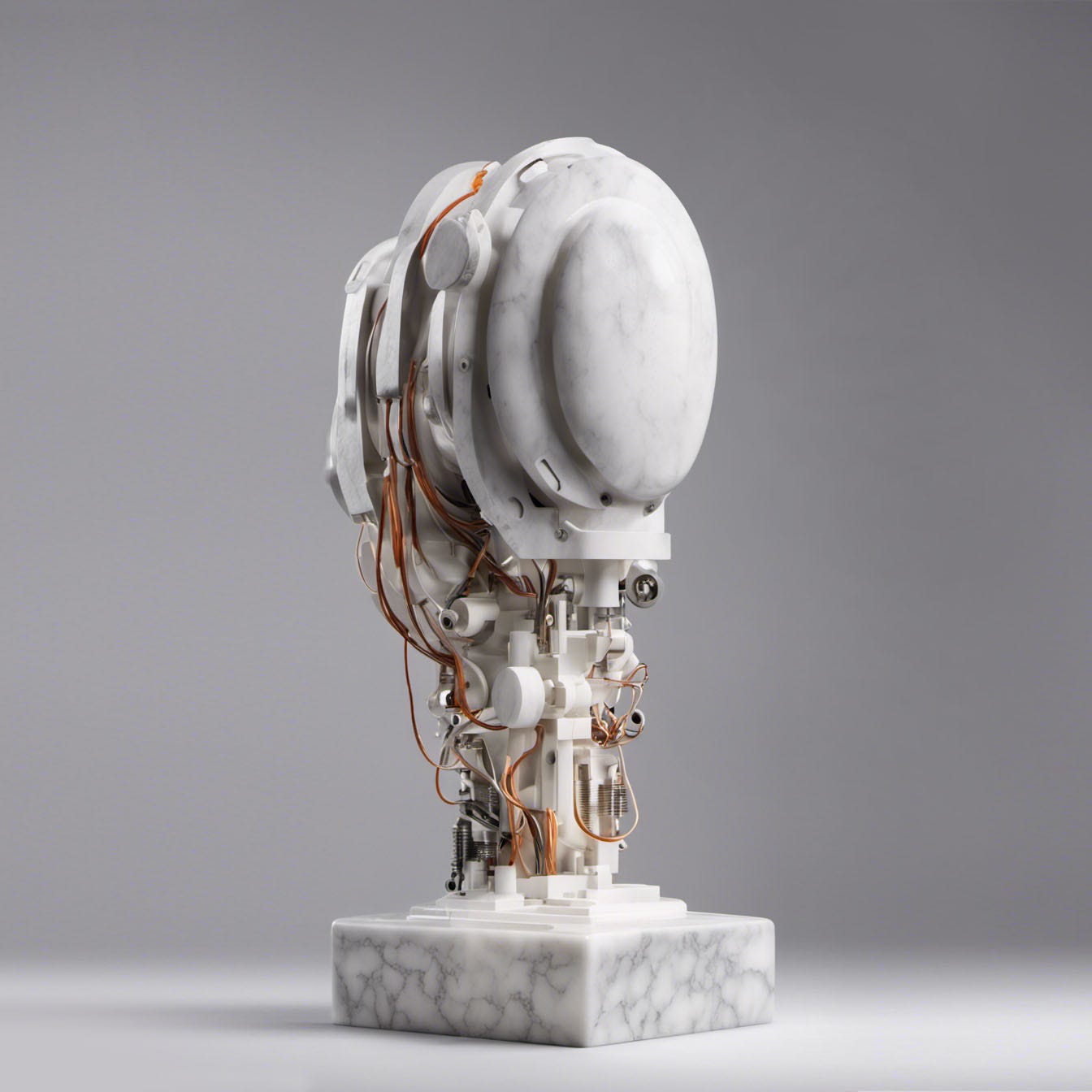
Here’s what one of my favorite contemporary thinkers on digital culture L.M. Sacasas had to say about the regrettable “Théâtre D’opéra Spatial” image. This was the infamous image that won an art contest and is so weird and bad I’ve decided not to share it here. This was a while ago but I think now is considered one of the first “important” works of AI art because of the controversy it caused. You can find it if you must but honestly, the particular image isn’t as interesting or as important as this insight that Sacasas provides:
I’ll begin by noting that when I first glanced at Allen’s “Théâtre D’opéra Spatial,” I was taken in by the image, which struck me as evocative and intriguing. But as I came back to the image and sat with it for a while, I found that my efforts to engage it at depth were thwarted. This happened when I began to inspect the image more closely. As I did so, my experience of the image began to devolve rather than deepen. When taken whole and at a glance, the image invited closer consideration, but it did not ultimately sustain or reward such attention.
This is not only because the image appeared to fail in some technical sense—hands, for example, seem to give these models trouble—it is that these errors, aberrations, or incongruities are, in a literal sense, insignificant—they signify nothing. They may startle or surprise, which is something, but they do not then go on to capitalize on that initial surprise to lead me on to some deeper insight or aesthetic experience.
L.M. Sacasas, Lonely Surfaces: On AI-generated Images The Convivial Society: Vol. 3, No. 20
I have always been interested in “errors, aberrations, and incongruities” in visual art. Artists have for many decades thought about and toyed with a closely related artifact of contemporary images and media: the glitch. Glitch aesthetics is an entire field of visual art complete with its own conferences, international exhibitions (some of which I have participated in) and leaders. The idea of what glitch art is, what it is for and how it is made has remained relatively unchanged for the last few decades, perhaps in part due to the strange relationship so-called “new media” art has with time. What I mean by that is there’s often nothing particularly new about new media. New Media Art pioneers in the 1970’s made the CRT television part of the enduring language of the form, to the extent that every today installation artists frequently make use of CRT’s despite it being a technology that is over half a century old. Like those boxy CRT televisions, the glitch is an artifact of a particular time.
We don’t yet have the language to describe the errors when it comes to AI. When it comes to text, some are using “hallucinations” for the things that generators just seem to make up out of whole cloth. I am not sure there’s an equivalent phrase for images, although there does seem to be an equivalent predilection; AI image-generators sometimes just invent physics, anatomy or histories that have no analogue in reality (black Nazi’s come to mind).
AI images are essentially the surrealist game of the exquisite corpse except the user is playing with millions of other anonymous creators. What results, what gets conjured is often an abbhoration or distortion of reality. Returning to Sacacas’s ideas, the important thing about glitch art and aesthetics is that glitch art goes on to “capitalize on that initial surprise” to lead to “some deeper insight or aesthetic experience” whereas most AI art does not. Or does not in a deliberate way.
I have seen a few artists being deliberate about using AI weirdness and mistakes in their works, but this is a developing trend and a strange one. I used AI to inform a recent body of paintings. Rather than include the AI anatomical hallucinations, I started each painting by digitally redacting or censoring the areas of the AI generated images that made no sense. In the end, I was left with paintings of bodies entangled in fields of color with some strange anatomical incongruitites. To me, these paintings speak to the tension between the human hand and the machine, and reality and representation.
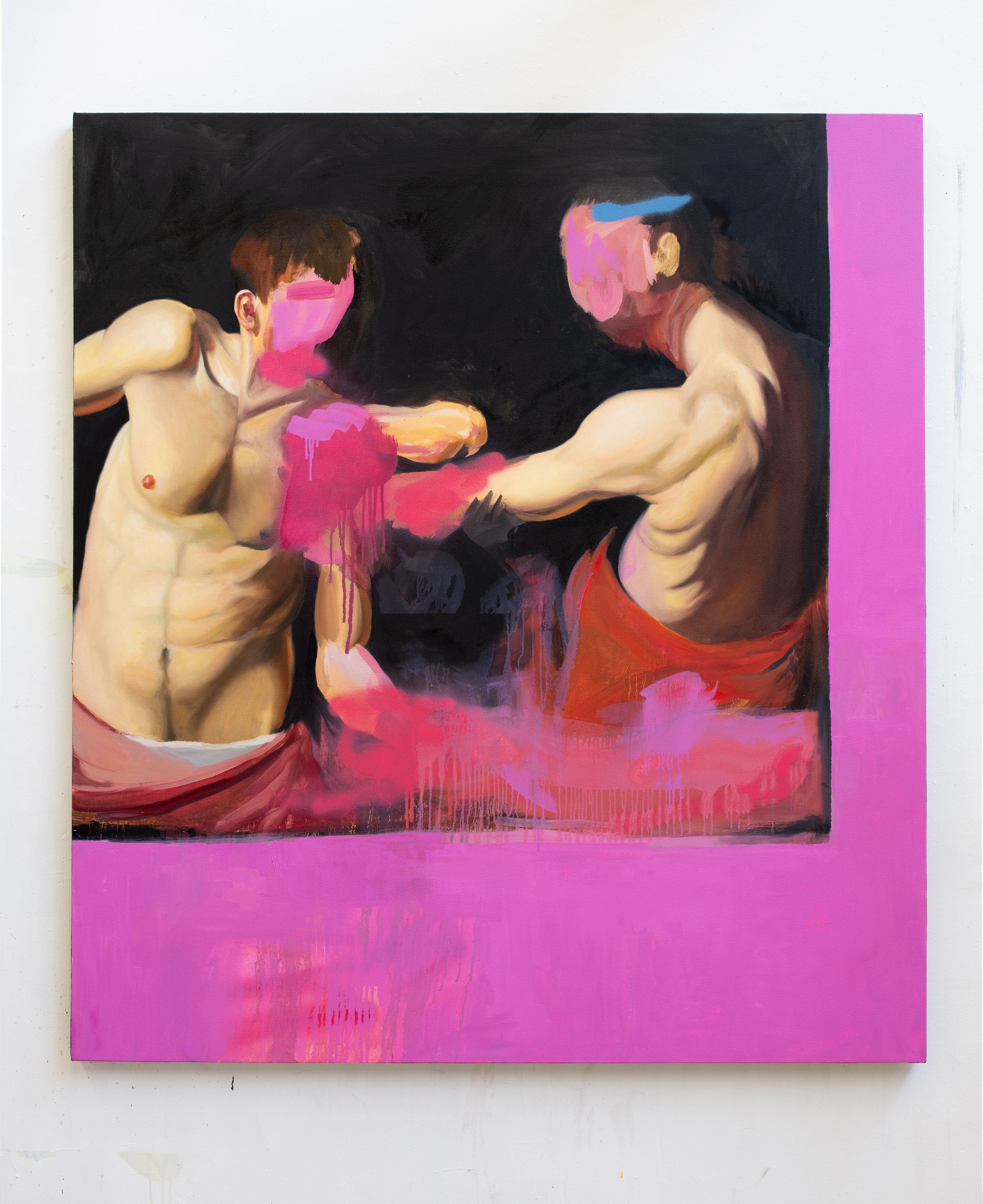
One interesting thing about AI image generation is that it “accidentally” does the kinds of things I was already doing with images in the few years before its adoption. Before, I was using Photoshop to deliberate stretch and distort images:
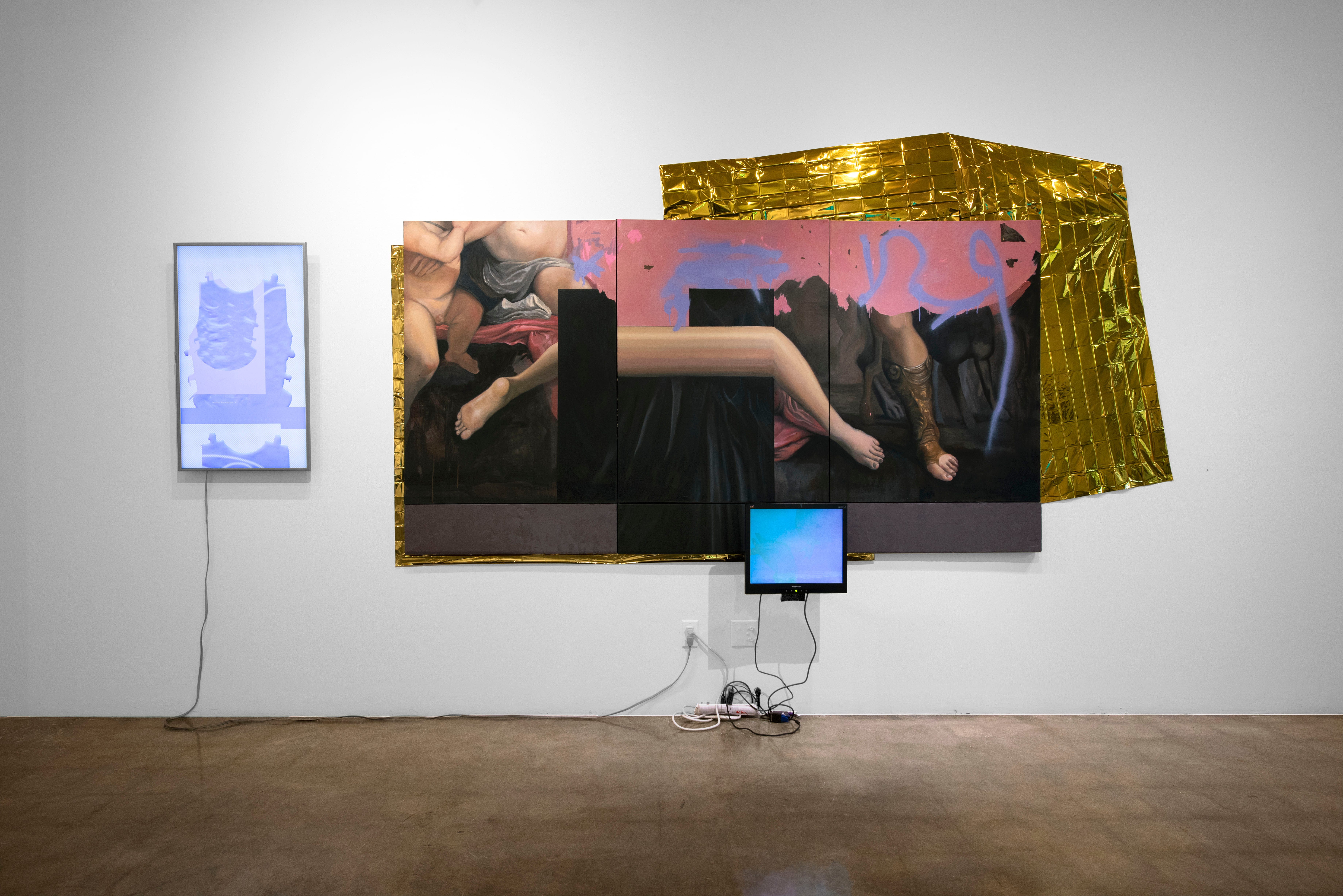
Right now AI image generators still often have a difficult time making images that are not distorted and…glitched. Perhaps this will be a short lived situation as AI generation gets more powerful. Or, perhaps the AI hallucination will be an enduring 21st century visual and literary convention? Just as the glitch was for the last few decades in the 20th.
Either way, one goal of artists is and should be intentionality. How can we be intentional about what we present to the world? For me, as both a practitioner and a skeptic of painting and new media art, hallucinations and glitches have come to symbolize a kind of impossibility: the impossibility of truly knowing or seeing something. The limits of trust in machines. And perhaps, the impossibility of real physical presence in a digital world.